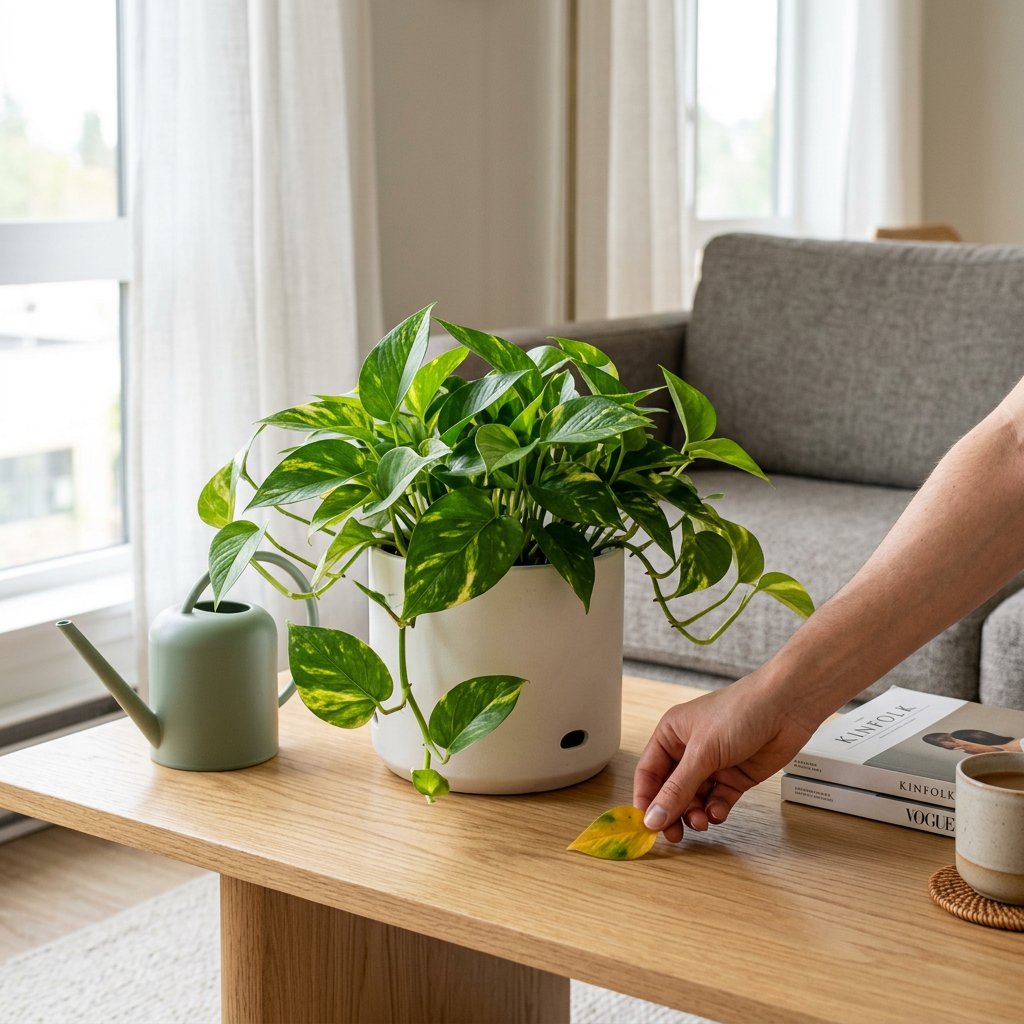
Pothos plants are famous for being nearly invincible, making them a favorite for both absolute beginners and seasoned indoor jungle curators. Because of this bulletproof reputation, watching your gorgeous, trailing pothos suddenly drop its leaves can feel incredibly discouraging. But take a deep breath and don't be hard on yourself! Plant issues happen to absolutely every plant parent. When a pothos sheds its leaves, it isn't holding a grudge; it is simply trying to communicate that something in its environment needs a little tweaking.
If you are unsure exactly what is wrong with your trailing beauty, you can always use the AI-powered plant disease scanner in the Plantiary app to get a diagnosis in seconds. Otherwise, let’s play plant detective together and figure out how to stop the drop and get your pothos thriving again.
The Problem: Recognizing the Symptoms
Before we fix the issue, we need to look at how your pothos is losing its leaves. Pay close attention to the following symptoms:
- Older leaves near the base of the soil are dropping: If this happens very slowly, it might just be senescence (the natural aging process where a plant sheds old leaves to redirect energy to new growth).
- Leaves are turning pale yellow and soft before falling: This is a classic cry for help, usually related to moisture levels in the soil.
- Leaves are crispy, brown, and crumbling off: This points toward severe dehydration or environmental stress.
- The vines are becoming bare and "leggy": Leaves are dropping along the stem, leaving a long, empty vine with only a few leaves at the very tip.
The Causes: Why the Leaves Keep Falling
To stop the shedding, we first need to identify the root cause. Here are the most common reasons your pothos is losing foliage:
1. Overwatering and Root Rot
This is the number one culprit behind dropping leaves. When pothos sit in waterlogged soil, they suffer from anoxia—a condition where the roots are completely deprived of oxygen. Unable to breathe, the roots begin to rot, which means they can no longer transport water and nutrients up to the leaves. The result? Soft, yellowing leaves that easily detach from the stem.
2. Extreme Underwatering
On the flip side, if the soil is bone-dry all the way through, your pothos will go into survival mode. To conserve whatever little moisture it has left, the plant will intentionally drop its leaves.
3. Insufficient Light
Pothos are celebrated for tolerating low light, but "low light" doesn't mean "no light." If kept in a dark corner, the plant will experience etiolation—a physical stretching of the stem as it desperately reaches for light. Because it cannot photosynthesize enough food to support a full head of foliage, it will drop leaves to save energy.
4. Temperature Shock and Drafts
Pothos are tropical plants that love stable, warm environments. If your plant is sitting directly in front of an AC vent, a drafty winter window, or a blazing radiator, the sudden temperature swings will stress the plant, causing it to drop leaves in protest.
The Solutions: Step-by-Step Treatment
Ready to nurse your pothos back to health? Follow these scientifically proven, actionable steps to stop the leaf drop.
Step 1: Assess the Soil Moisture Push your finger about two inches into the potting mix. If it feels soaking wet and heavy, you are overwatering. If it feels like dusty, compacted cement, you are underwatering. Plantiary's watering tracker is a fantastic tool to help you nail the perfect watering schedule going forward!
Step 2: Check the Roots (If Overwatered) If the soil is soggy, gently pull the plant out of its pot. Healthy roots are firm and white or light tan. If you see dark, mushy, or foul-smelling roots, you have root rot. Trim away the decaying roots with sterilized scissors, and repot the plant in fresh, well-draining soil (a mix of indoor potting soil, perlite, and orchid bark is perfect). Ensure the new pot has drainage holes!
Step 3: Rehydrate (If Underwatered) If the soil is completely dry and pulling away from the sides of the pot, your plant needs a good soak. Place the pot in a bowl of room-temperature water for 30-45 minutes so the soil can absorb moisture from the bottom up. Let it drain completely before putting it back in its decorative pot.
Step 4: Optimize the Lighting Move your pothos to a spot where it receives bright, indirect sunlight. A few feet away from an east or west-facing window is usually the sweet spot. You will notice the vines growing closer together and the leaves looking much fuller.
Step 5: Prune and Propagate Once a pothos drops a leaf from a vine, a new leaf will not grow back in that exact same empty spot. If you are left with long, bare stems, don't be afraid to give your plant a haircut! Prune the bare vines back to the soil level. This encourages the plant to push out bushy new growth from the top. You can even propagate the healthy ends of the cuttings in water to create a brand-new plant!
Remember, plants operate on their own timeline. Be patient, make one adjustment at a time, and rely on your Plantiary app to keep your care routines consistent. Before you know it, your pothos will be trailing beautifully once again!