Have you ever reached out to touch your favorite houseplant only to find its leaves feeling strangely tacky, almost like someone spilled syrup on them? Or perhaps you’ve noticed a mysteriously sticky residue on the floor or furniture just below your plant’s pot. Take a deep breath! Finding sticky leaves is a surprisingly common issue that happens to every plant parent at some point. It certainly doesn't mean you've failed or done something wrong. With a little bit of detective work and some gentle care, your green companion will be back to its beautiful, thriving self in no time.
If you are ever unsure of what is happening to your plant, you can always use the AI-powered plant disease scanner in the Plantiary app to get a highly accurate diagnosis in seconds! Let’s break down exactly what this sticky substance is, why it's there, and how to safely fix it.
The Problem: Identifying the Sticky Symptoms
When you notice your plant's leaves have become sticky, you are looking at a substance botanists call honeydew. Despite its lovely-sounding name, honeydew is simply a sugary excretion left behind by certain types of insects.
Here is what you might observe:
- A glossy shine: The leaves may look unnaturally shiny, almost as if they were polished with wax.
- Sticky residue: The leaves, stems, and even the surrounding floor or tabletop feel tacky to the touch.
- Black, powdery patches: If the honeydew sits on the leaf for too long, it can attract a secondary issue called sooty mold. This is a type of black fungus that grows on the sugary syrup. While sooty mold itself doesn't directly infect the plant, it can block sunlight and hinder photosynthesis, making your plant look dull and feel weak.
The Causes: Who Left This Sticky Mess?
The presence of honeydew points to one specific cause: sap-sucking insects. These tiny pests pierce the fleshy parts of your plant to feed on the nutrient-rich sap inside. Because plant sap is incredibly high in sugar but low in the proteins these insects need, they have to drink a massive amount of it. They process the proteins and excrete the excess sugar out of their bodies as—you guessed it—sticky honeydew.
The most common culprits include:
- Aphids: Tiny, pear-shaped bugs that cluster in large numbers on new growth and the undersides of leaves.
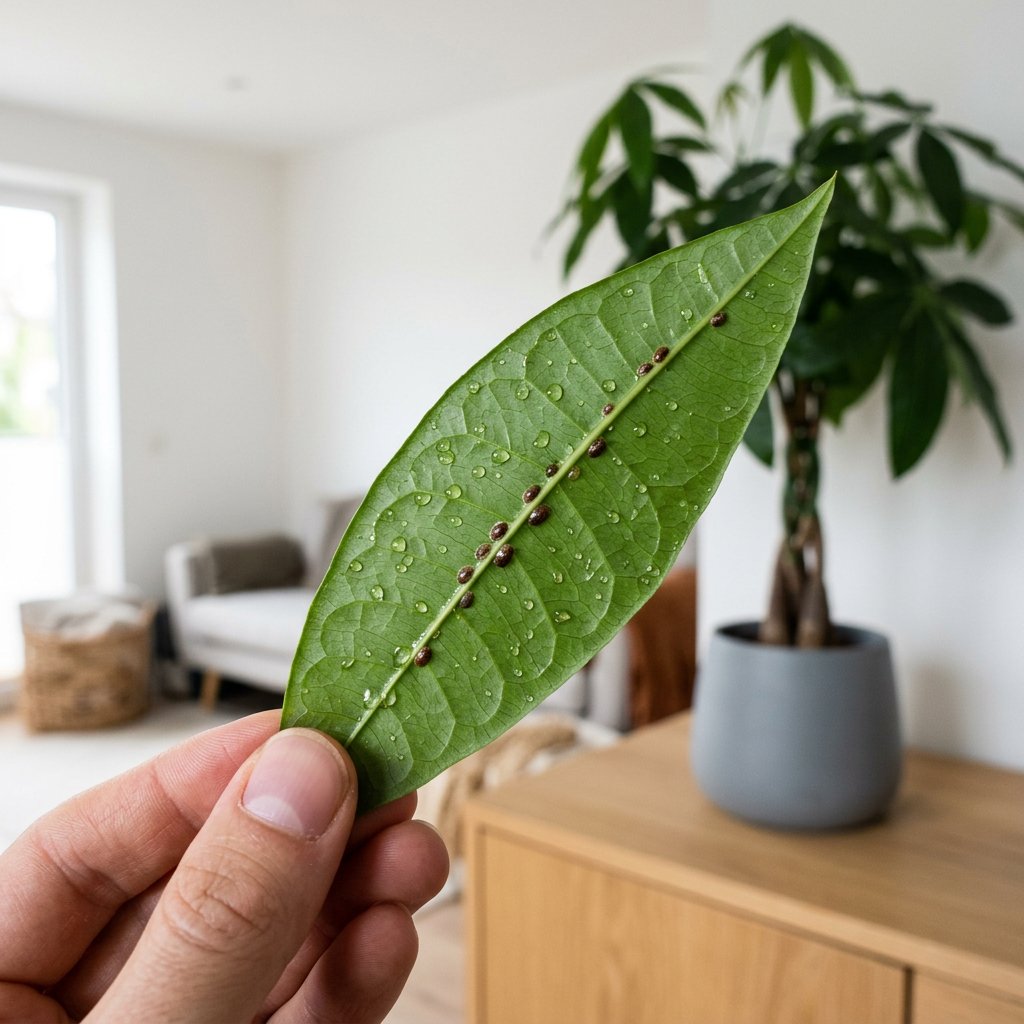
- Scale Insects: These tricky pests look like tiny brown, black, or tan bumps firmly attached to the stems and leaves. They often look more like a plant disease than an actual insect!
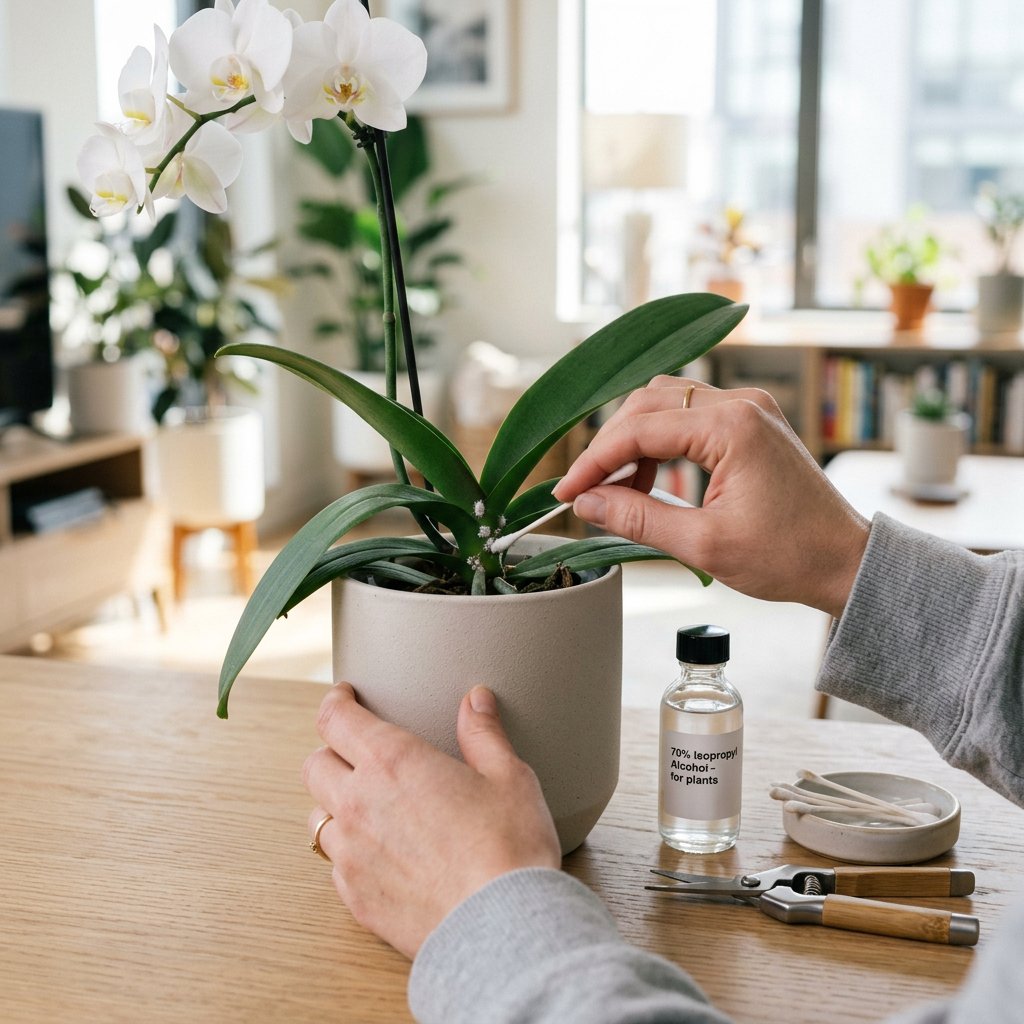
- Mealybugs: These look like small, fuzzy, white masses of cotton hiding in the crevices where leaves meet the stem.
The Solutions: Step-by-Step Treatment
Treating sticky leaves means evicting the pests causing the problem. Put away the harsh chemicals and unverified home remedies—we only need safe, scientifically proven methods to get your plant healthy again.
Step 1: Isolate the affected plant As soon as you notice the stickiness, move the plant away from your other houseplants. Sap-sucking insects can easily travel from pot to pot, so a temporary quarantine is essential to protect your indoor jungle.
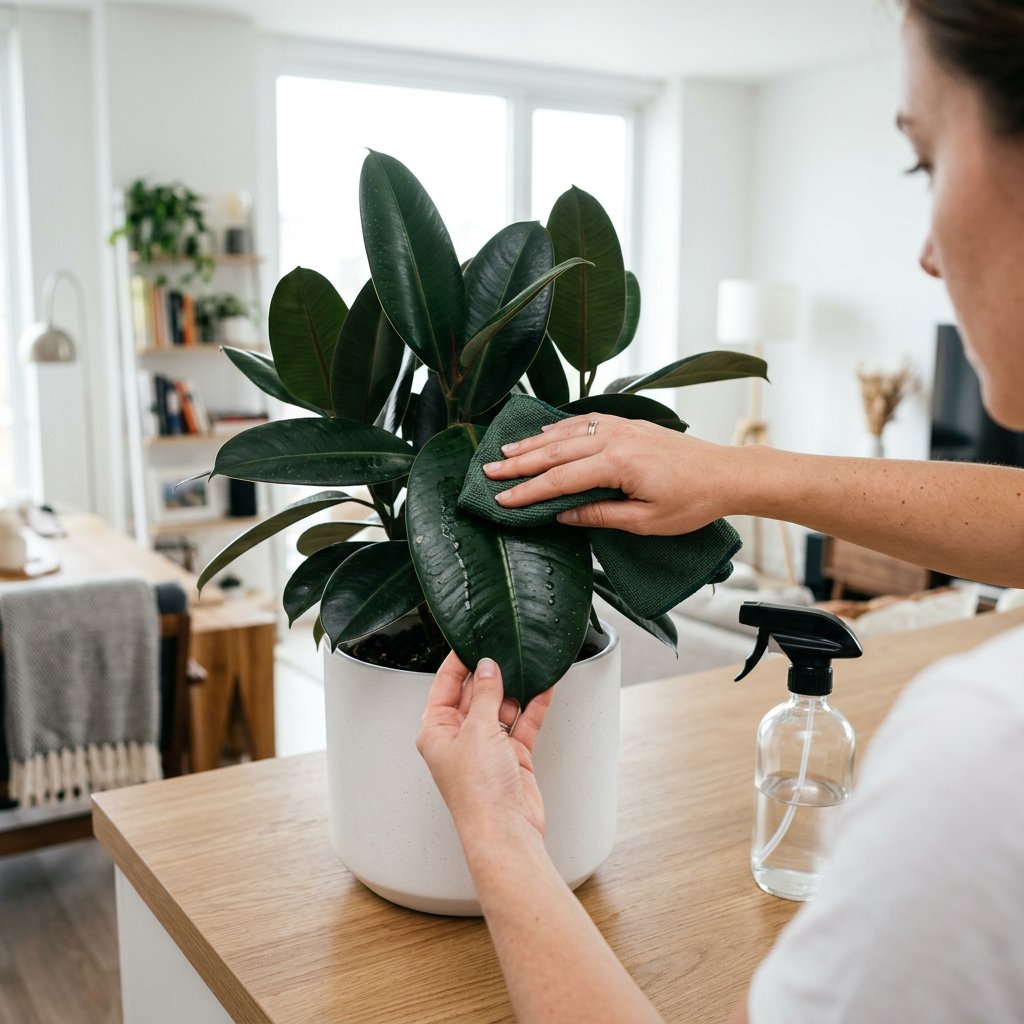
Step 2: Wash away the honeydew Before tackling the bugs, clean the leaves. You can pop the plant into your shower and gently rinse the foliage with lukewarm water. Alternatively, use a damp, soft cloth with a tiny drop of pure, mild castile soap to carefully wipe down the leaves and stems. This instantly removes the sticky honeydew and any accompanying sooty mold, allowing your plant to breathe and photosynthesize properly.
Step 3: Treat the underlying pest issue Now it’s time to deal with the insects safely:
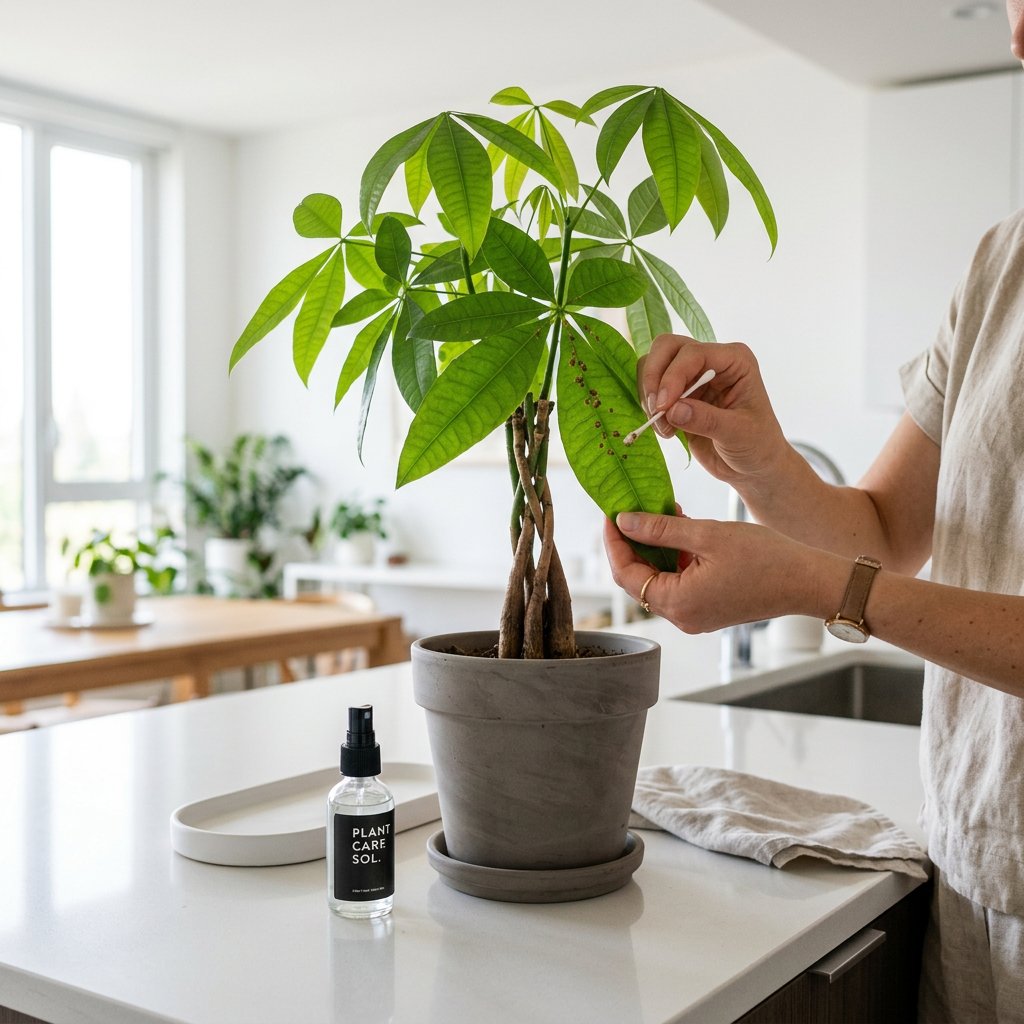
- For mealybugs and scale, dip a cotton swab in standard rubbing alcohol (70% isopropyl alcohol) and dab it directly onto the pests. The alcohol instantly breaks down their protective outer coatings.
- Follow up by thoroughly spraying the plant with Neem oil or a commercially formulated insecticidal soap. Neem oil is a natural, plant-based oil that disrupts the life cycle of pests without harming your plant. Be sure to spray the undersides of the leaves and the joints of the stems where bugs love to hide.
Step 4: Monitor and repeat Pests have incredibly fast life cycles, and eggs can hatch days after your initial treatment. You will likely need to repeat Step 3 every 5 to 7 days for about a month to break the life cycle completely. To make this easy, open your Plantiary app and set a custom care reminder so you never miss a treatment day!
Dealing with sticky leaves and the pests that cause them is a rite of passage in the plant community. Stay consistent with your treatments, be patient with your plant, and you'll easily overcome this little hurdle!