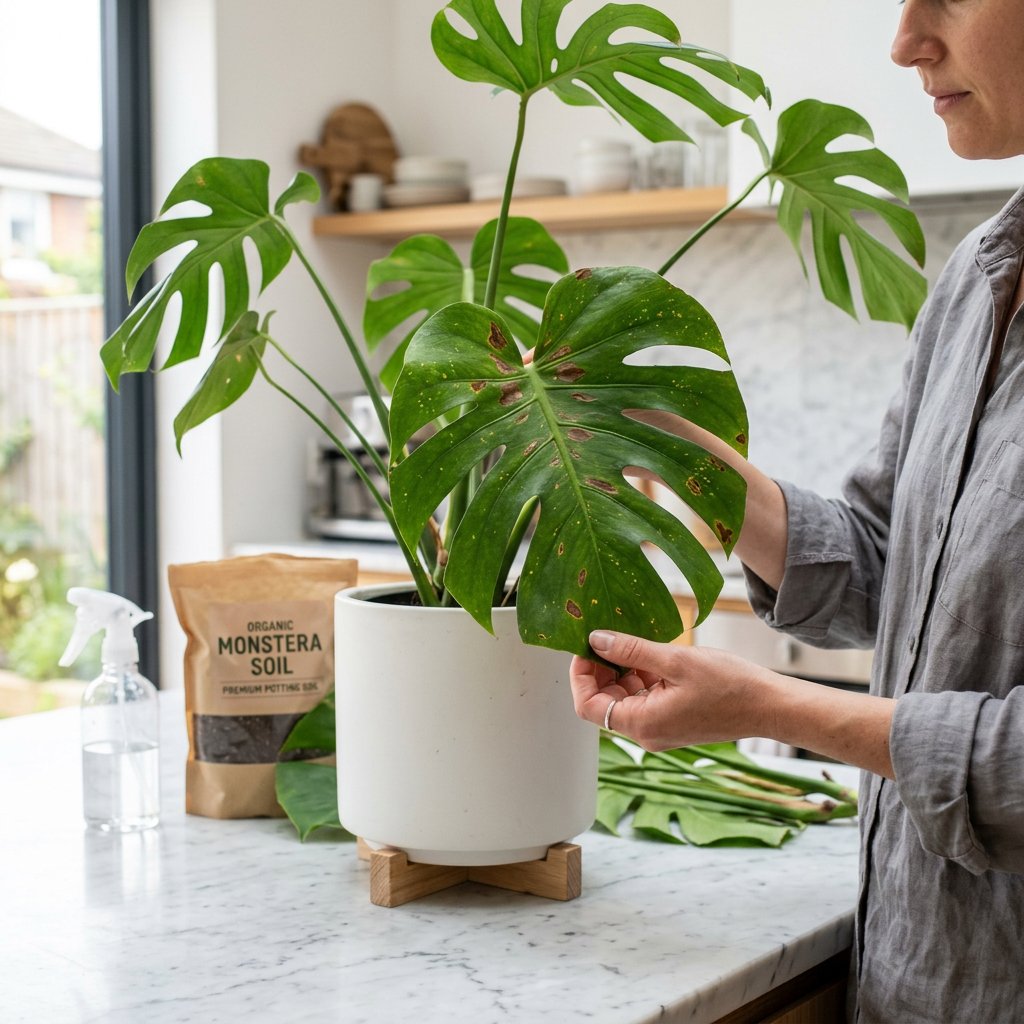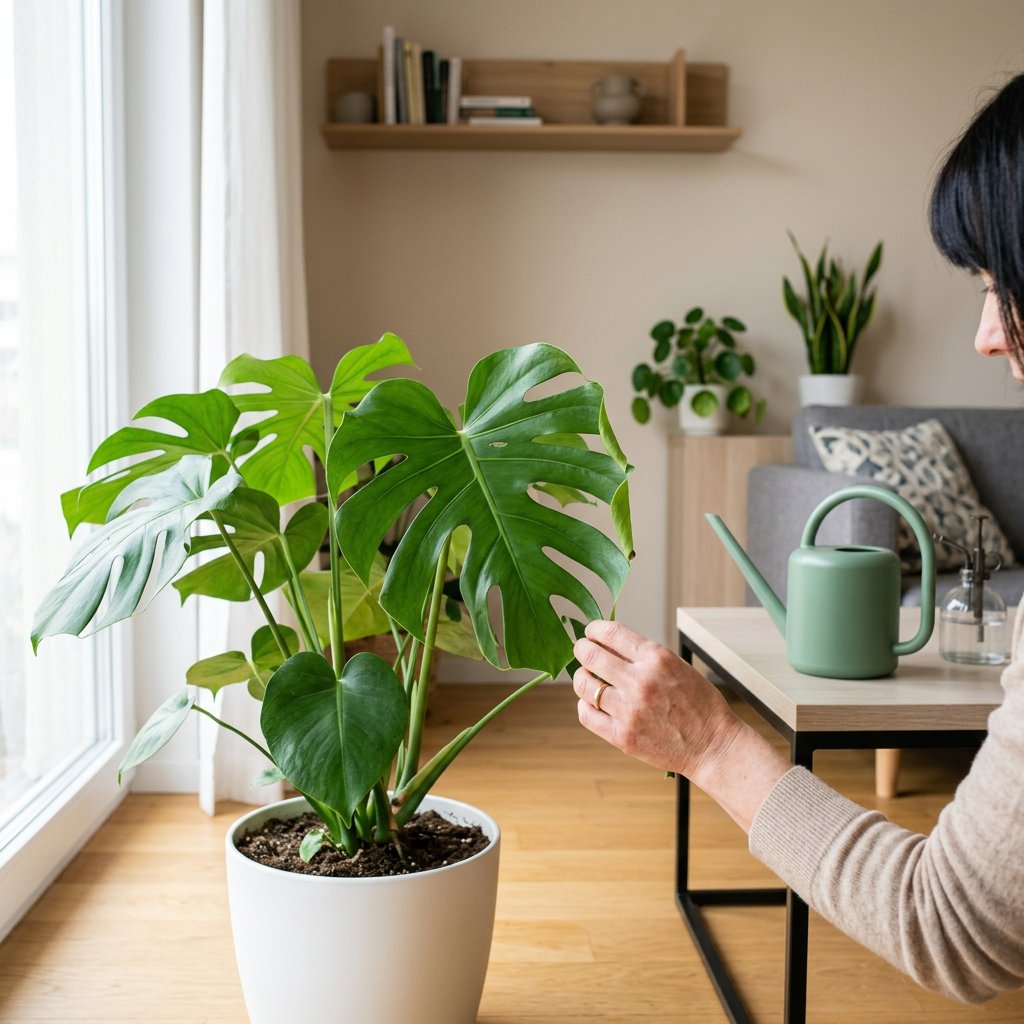
If you are staring at your beloved Monstera Deliciosa and wondering why its iconic, split leaves are suddenly looking a little sad, you are not alone. Discovering tiny bugs on your indoor jungle can send even the most experienced plant parent into a panic. Take a deep breath! Pests like thrips are incredibly common, and finding them doesn't mean you are a bad plant owner. They happen to the best of us.
If you are unsure what is wrong with your plant, you can always use the AI-powered plant disease scanner in the Plantiary app to get a diagnosis in seconds. However, if you already know you are dealing with thrips, you are in the right place. Let’s break down how to identify, understand, and safely banish these pesky hitchhikers for good.
The Problem: Symptoms of Thrips on Your Monstera
Thrips are tiny, slender insects—often no bigger than a sewing needle's tip. Adult thrips are usually dark brown or black and can fly, while the larvae are pale yellow or green and crawl along the leaves. Because they are so small, you will likely notice the damage before you spot the bugs themselves.
Look out for these telltale signs:
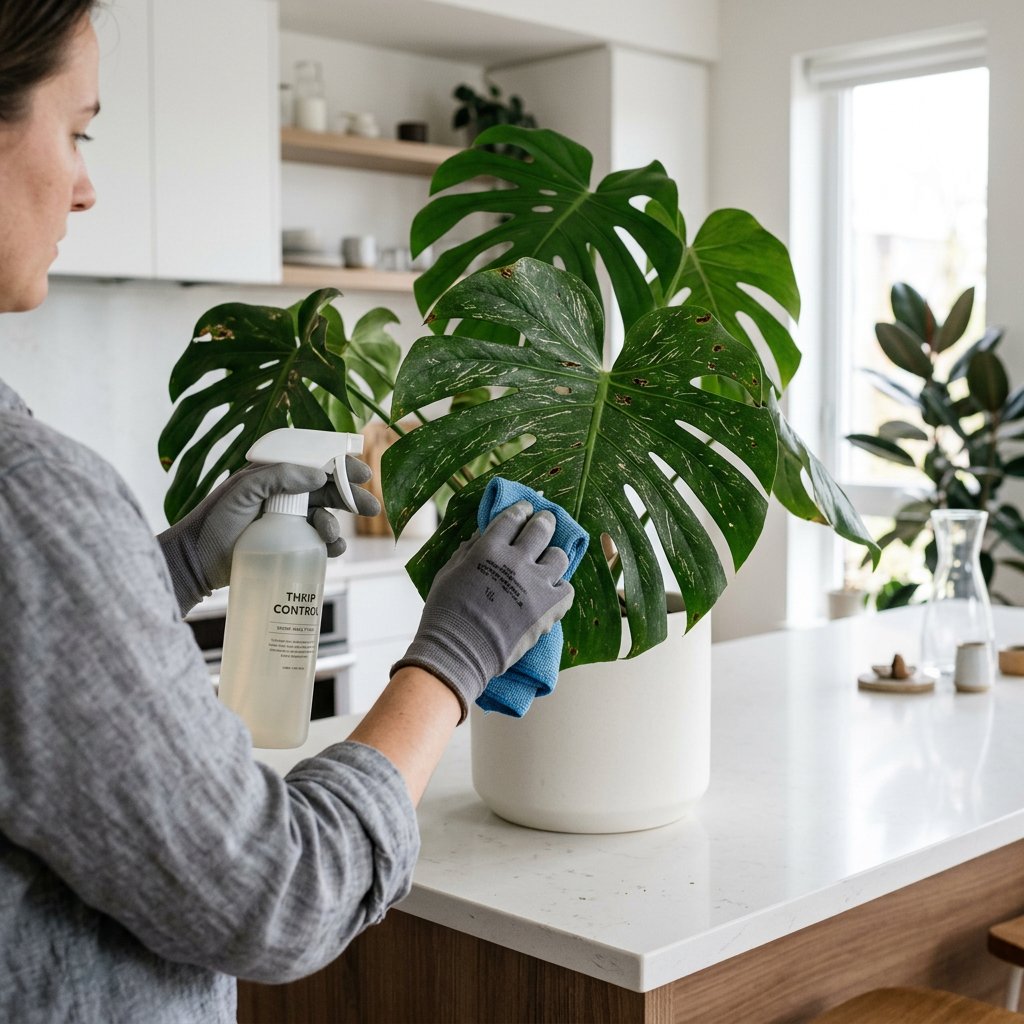
- Silvery patches: Thrips feed by puncturing the plant tissue and sucking out the cellular contents. This leaves behind distinct, irregular silvery or grayish streaks on the leaves.
- Chlorosis: This is a botanical term that simply means a loss of green pigment, resulting in pale or yellowing leaves. As thrips drain the plant's energy, the damaged leaves will begin to yellow and eventually die off.
- Tiny black specks: You might notice tiny black dots scattered across the silvery damage. This is frass—a polite scientific term for bug droppings.
- Distorted new growth: Thrips love to hide inside curled, unfurling new leaves. If your Monstera's new growth emerges deformed, bumpy, or brown at the edges, thrips are a highly likely culprit.
The Causes: How Did Thrips Invade?
It is easy to feel guilty when pests appear, but thrips are opportunistic and sneaky. They usually find their way onto your Monstera through a few common avenues:
- New plant additions: Bringing a new, unquarantined plant into your home is the most common way thrips are introduced to your indoor garden.
- Open windows and doors: Because adult thrips can fly and are easily carried by the wind, they can simply blow in through an open window during the warmer months.
- Clothing and pets: Thrips can easily hitch a ride on your clothes after you spend time outdoors, or on your dog's fur after a walk.
The Solutions: Step-by-Step Thrips Treatment
Treating thrips takes a little bit of patience because they lay their eggs inside the plant tissue, protecting the unborn pests from surface treatments. Don't worry, though—with a consistent routine, you can completely eradicate them.
Step 1: Isolate the Plant
The very first thing you need to do is quarantine your Monstera Deliciosa. Move it away from all your other houseplants immediately. Thrips spread quickly, and keeping the infected plant isolated will protect the rest of your urban jungle.
Step 2: Give Your Monstera a Shower
Physically removing as many pests as possible is a great head start. Place your Monstera in the shower or take it outside (if the weather is mild) and gently spray down the foliage with lukewarm water. Support the leaves with your hand so they don't snap or tear under the water pressure.
Step 3: Apply Insecticidal Soap or Neem Oil
Once the plant is dry, it is time to treat the foliage. Spray the plant thoroughly with a high-quality, commercially formulated insecticidal soap or Neem oil.
- How to apply: Make sure to coat the tops and bottoms of every leaf, as well as the stems.
- Safety tip: Only apply these sprays in the evening or when the plant is out of direct sunlight to prevent the leaves from burning.
Step 4: Use a Systemic Insecticide (Optional but Highly Recommended)
Because thrips lay eggs deep inside the plant's tissue, topical sprays won't reach the unhatched babies. Adding a systemic insecticide granule to your soil is incredibly effective. When you water the plant, the roots absorb the treatment, turning the plant itself into a thrip-fighting machine from the inside out. (Note: Systemic treatments are toxic to pets, so keep treated plants out of reach of curious cats and dogs).
Step 5: Be Consistent and Monitor
Thrips have a life cycle of about 3 to 4 weeks. To completely break this cycle, you must repeat your topical treatments (Step 3) every 4 to 7 days for at least a month.
Plant parenting is a journey of continuous learning, and nursing a sick plant back to health is incredibly rewarding. To make your treatment schedule easier, log your watering and pest-treatment days into the Plantiary app. With our automated care reminders, you will never miss a treatment day, ensuring your beautiful Monstera Deliciosa returns to its lush, vibrant, and pest-free glory in no time!