Let's face it: we've all been guilty of loving our plants a little too much at some point. If you’ve noticed your famously indestructible ZZ Plant (Zamioculcas zamiifolia) developing yellow leaves, don't panic, and definitely don't beat yourself up! Plant parenting is a journey of trial and error, and yellowing foliage is a very common bump in the road. While ZZ plants are known for thriving on neglect, treating them to too much water can quickly turn their glossy green leaves into a yellow, drooping mess. The good news? Your plant is incredibly resilient, and with a few simple adjustments, we can nurse it back to perfect health.
The Problem: Recognizing the Symptoms
Before we jump into fixing the issue, let's confirm what's going on. When a ZZ plant receives too much water, it often develops chlorosis—a botanical term simply meaning the yellowing of leaf tissue due to a lack of chlorophyll.
Here are the telltale signs that your ZZ plant is swimming in too much water:
- Yellowing leaves: This usually begins on the lower half of the plant and spreads upward.
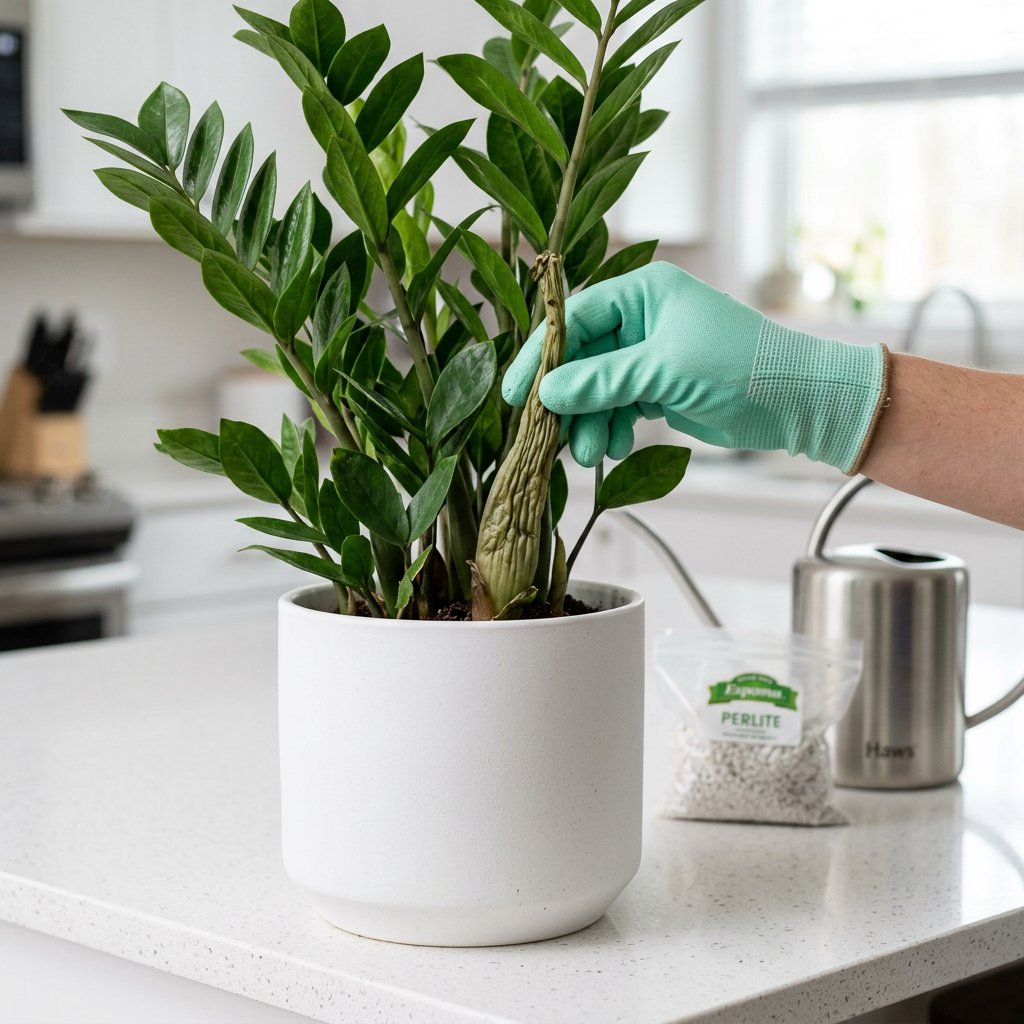
- Mushy stems: The thick stalks may feel soft, squishy, or even effortlessly detach from the soil when gently tugged.
- Drooping foliage: Despite being watered, the plant looks wilted, heavy, and sad.
- Foul odor: A musty or rotten smell coming from the potting soil is a classic sign of trouble beneath the surface.
If you are unsure what is wrong with your plant, you can use the AI-powered plant disease scanner in the Plantiary app to get a reliable diagnosis in seconds!
The Causes: Why Overwatering Hurts Your ZZ Plant
To understand why overwatering happens, we need to look at how this magnificent plant survives in nature. ZZ plants originate from arid regions in Eastern Africa, meaning they are exceptionally drought-tolerant. Beneath the soil, they feature thick, potato-like structures called rhizomes. These rhizomes act as massive water reservoirs, intelligently storing moisture for long periods of drought.
When you water a ZZ plant too frequently, these rhizomes absorb more water than they can handle. The soil stays continuously wet, which literally suffocates the root system by cutting off oxygen. This lack of oxygen leads to root rot, a fungal condition where roots turn brown, mushy, and die off. Without a healthy root system, the plant can't take up essential nutrients, resulting in those beautiful green leaves turning yellow.
The Solutions: Step-by-Step Guide to Saving Your ZZ Plant
Don't worry—saving an overwatered ZZ plant is entirely possible! Roll up your sleeves and follow these scientifically proven, step-by-step rescue instructions:
- Step 1: Stop watering and assess. Immediately pause your watering routine. Move the plant to a spot with bright, indirect light to help the soil dry out faster. Avoid harsh direct sunlight, which can stress the already vulnerable plant.
- Step 2: Inspect the roots. Gently slide the plant out of its pot to examine the rhizomes and roots beneath the soil. Healthy roots are firm and white or light tan. If you see roots that are dark brown, black, slimy, or smell foul, root rot has set in.
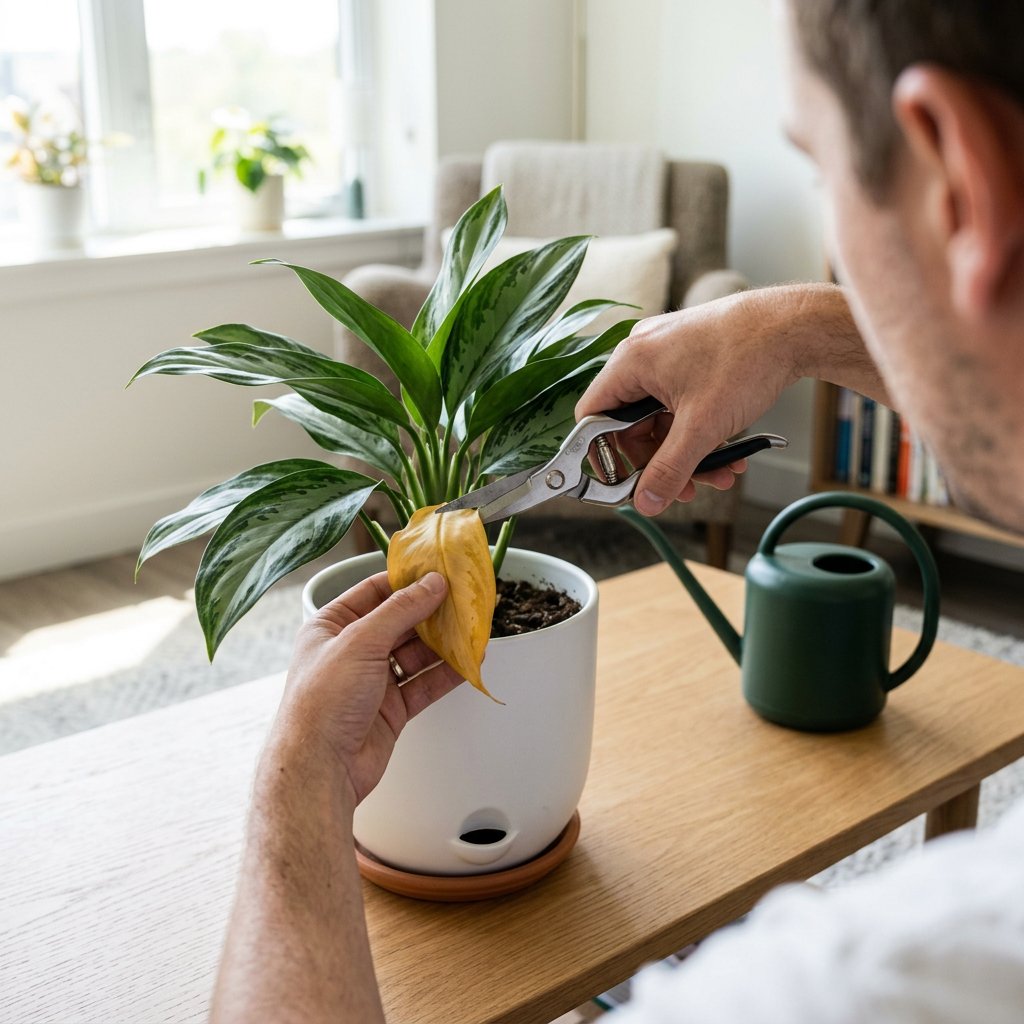
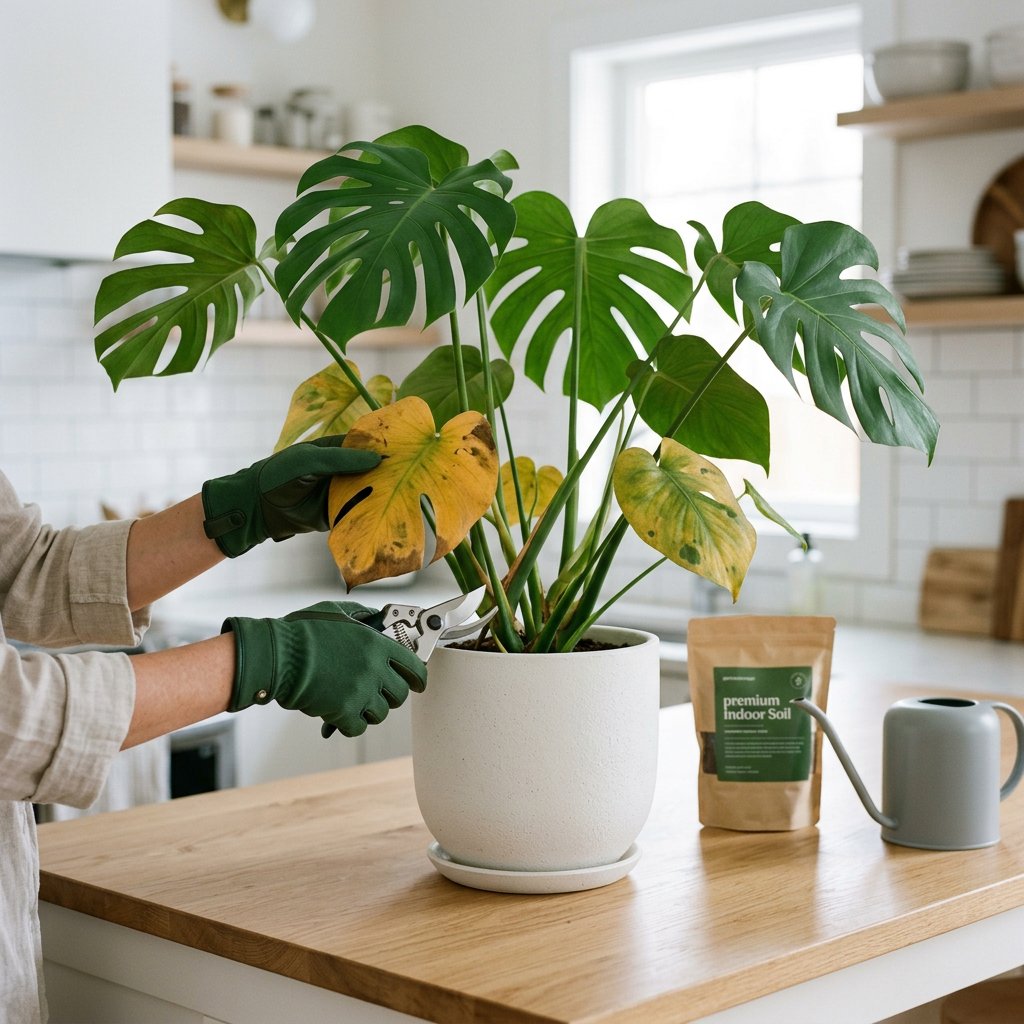
- Step 3: Prune the damage. Take a pair of clean, sterilized pruning shears (wiping them with rubbing alcohol works perfectly) and carefully snip away any mushy, rotten roots. You should also prune the severely yellowed leaves and mushy stems at the base. You must remove the rot entirely to prevent it from spreading.
- Step 4: Repot in fresh soil. Throw away the old, soggy soil—do not reuse it! Repot your ZZ plant in a fresh, well-draining potting mix. A mixture of standard indoor potting soil heavily amended with perlite and a handful of orchid bark is excellent for root airflow. Most importantly, ensure your new pot has ample drainage holes at the bottom.
- Step 5: Adjust your watering routine. Moving forward, only water your ZZ plant when the soil is completely dry from top to bottom. Depending on your home's lighting and temperature, this could mean watering just once every three to four weeks.
Plant Parenting Made Easier
Seeing yellow leaves on your ZZ plant is not a failure; it’s just your plant's way of communicating with you. By taking swift action, pruning the damage, and letting those roots breathe, your resilient ZZ plant will bounce back and push out fresh new growth.
To take the guesswork out of your plant care routine, try using the Plantiary app! You can set up customized watering reminders tailored specifically to your ZZ plant’s needs and environment, ensuring you never accidentally overwater again. You've got this, plant parent!